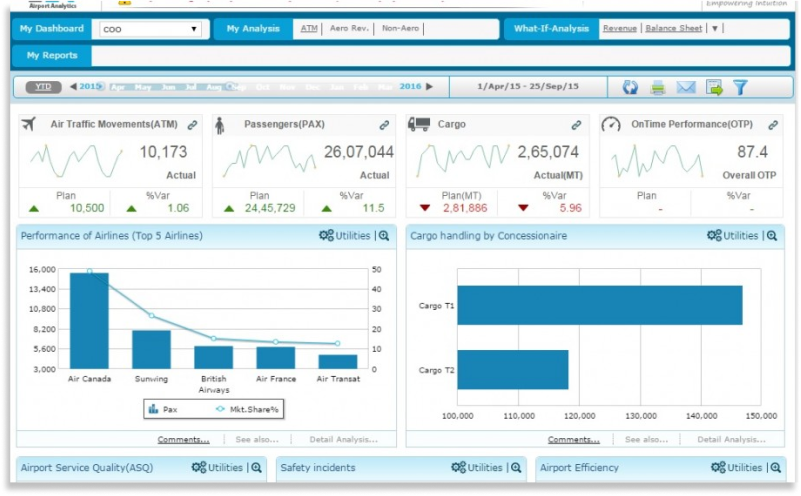

Employee Overview & Workforce Demographics
- Deliver enterprise-wide visibility into headcount, new hires, attrition, turnover trends, and exit drivers with forecast vs. actual comparisons
- Showcase workforce composition across department, role, grade, designation, age, gender, and nationality
- Reveal period-on-period movement patterns to assess hiring momentum and organisational stability
- Equip leadership with a unified view of workforce structure, dynamics, and talent flow
Costs & Benefits Analytics
- Provide comprehensive insight into employee remuneration, benefits, and total workforce expenditure
- Break down cost distribution across department, role, grade, and designation for financial transparency
- Compare budgeted versus actual workforce spend to uncover cost drivers and variances
- Present benefit utilisation trends, including accommodation and other employee entitlements
Talent Acquisition & Recruitment Performance
- Provide end-to-end visibility into hiring requests for new and replacement roles alongside forecast vs. actual fulfilment
- Showcase SLA adherence with clear distinction between on-time and delayed closures, across recruitment stages
- Highlight recruiter performance through pipeline progression and closure effectiveness
- Deliver segmented recruitment intelligence by grade, hiring source, department, role, and designation
Attendance, Leave & Workforce Utilisation
- Illustrate attendance behaviour, overtime, short time, and leave patterns across the organisation
- Examine sick leave dynamics using Bradford Score and other absence indicators
- Break down trends by department, role, grade, and designation for focused interventions
- Support proactive workforce optimisation through structured absence and availability reporting
Learning, Development & Training Effectiveness
- Provide structured visibility into planned, scheduled, and completed training programs
- Compare forecasted versus actual participation alongside associated training costs
- Segment learning performance by department, role, grade, and designation
- Reinforce capability building with insights into training reach, cost efficiency, and participation outcomes
Emerging Talent, Performance & Succession Analytics
- Highlight high performers and high-potential talent using structured scoring models based on qualifications, experience, skills, progression, and cross-functional exposure
- Consolidate performance appraisal outcomes with engagement and satisfaction indicators
- Reveal underlying drivers influencing attrition, productivity, and overall talent risk
- Capture indirect workforce expenses including travel, insurance, medical, and severance costs.
Organisation Structure & Workforce Planning
- Model organisation structures including reporting lines, roles, and accountability frameworks
- Strengthen department-level budgeting and workforce planning using structural and cost modelling
- Incorporate workforce cost simulations to guide allocation and optimisation decisions
- Support growth, restructuring, and efficiency initiatives through scenario-based organisational planning